UAS

Categories
UAS in the News

Brian Riches takes oath of office as new Chair to the NICTA & UAS Boards

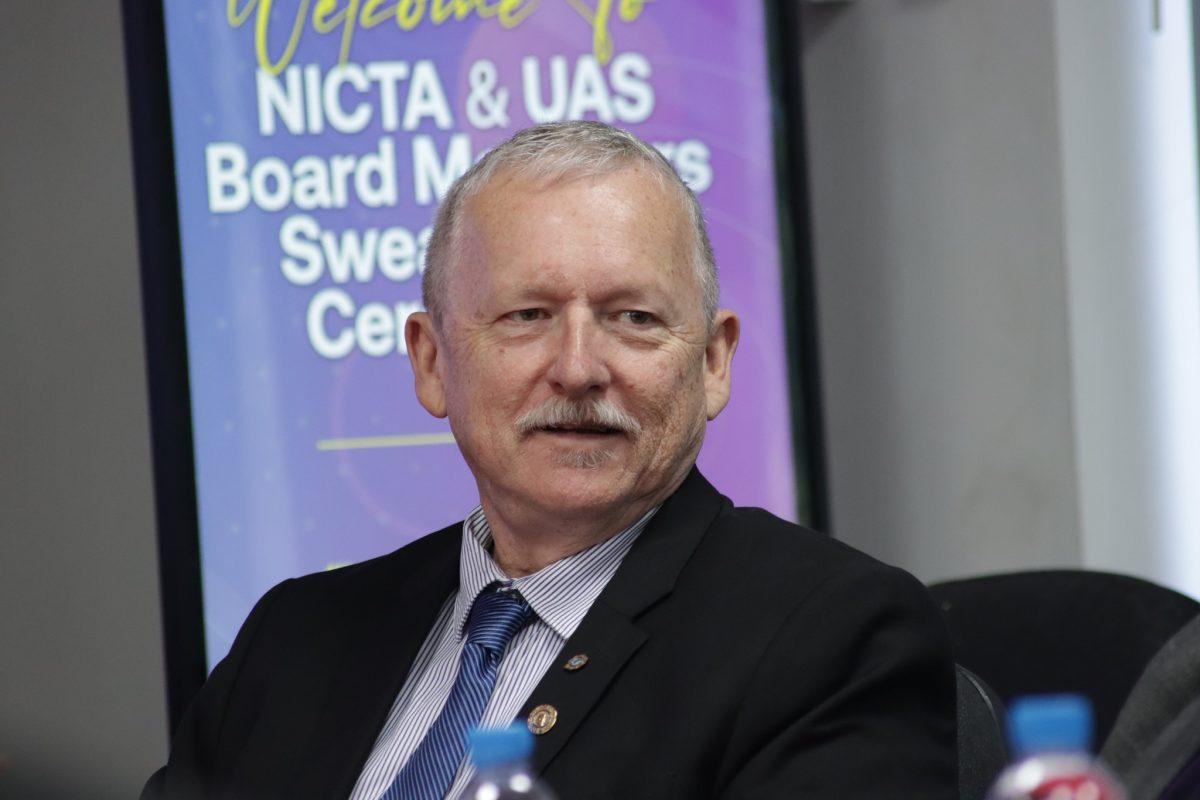
Monday 7th July 2025, Port Moresby. The National Information and Communications Technology Authority (NICTA) and the Universal Access and Service (UAS) Boards today had the official swearing-in of two distinguished individuals to key leadership roles, reinforcing the Government’s commitment to inclusive and forward-looking ICT governance in Papua New Guinea.

Mr. Brian Riches was formally sworn in today as the new Chairman of the NICTA Board and concurrently assumes the role of Chairman of the UAS Board. Mr. Riches replaces former Chairman Mr. Noel Mobiha, who is a long serving, well known and accomplished member of the PNG ICT community, contribution to the NICTA has been invaluable.

Mr. Riches’ appointment is expected to strengthen the strategic direction of both Boards in advancing digital transformation and equitable access to ICT services across the country.

Joining Mr. Riches on the NICTA Board is Mr. Charles Chew, who has been appointed as the Independent Expert. Mr. Chew was not present today however, will be taking his oath of office later.
Riches and Chew join John Cholai non-executive Member and NICTA’s Chief Executive Officer, Kila Gulo-Vui ( ex-officio), fulfilling the four-member composition of the NICTA Board.

Mr. Jack Tomon was sworn in as the Private Sector Representative on the UAS Board. His appointment reflects the Government’s commitment to fostering public-private collaboration in expanding ICT access to underserved communities.

Tomon from the private sector makes up part of the 5-member composition of the UAS Board. The other members are head of Department of ICT (DICT) (ex-officio), head of National Planning (ex-officio), head of Department of Finance (ex-officio) and the chair of NICTA Board.

#NICTA#NICTABoard#UASBoard#

Categories
UAS in the News

Tubusereia Junior High School benefits from NICTA Universal Access and Service (UAS) -Connect the School Program

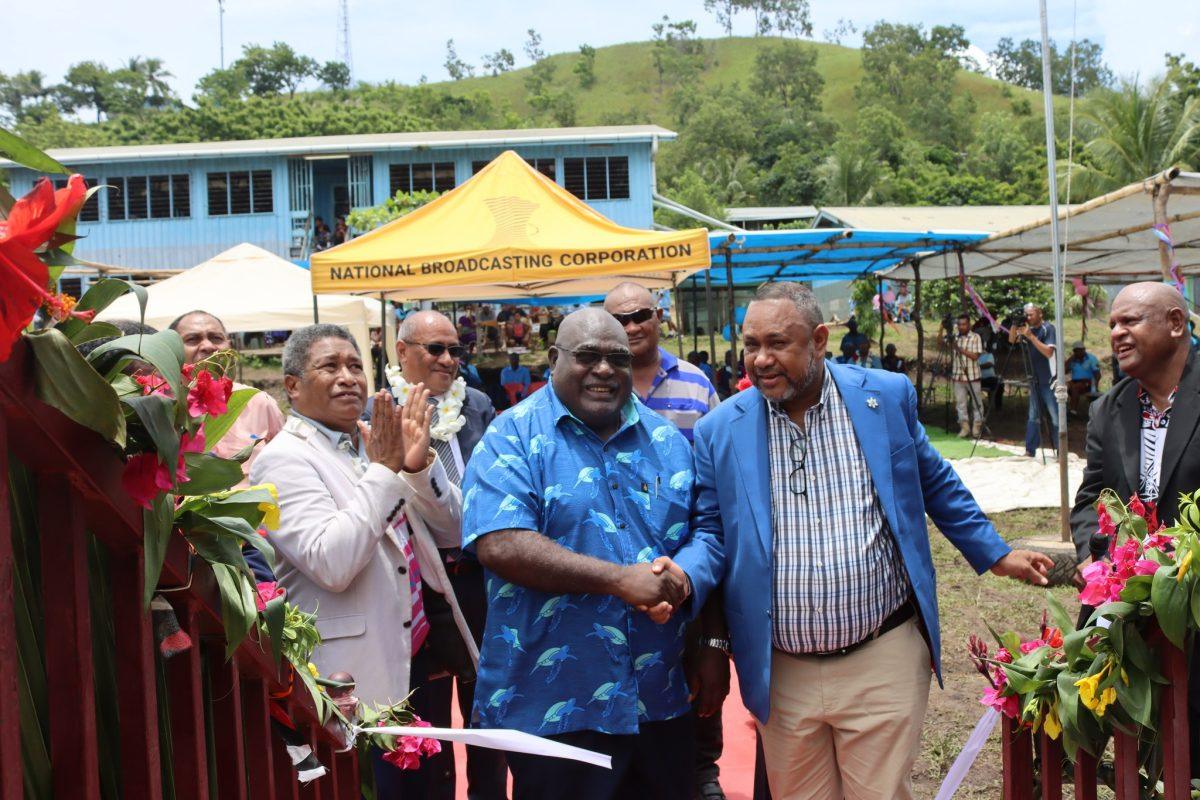
Tubusereia Junior High School ,in Central Province had its ICT centre commissioned last Friday by Minister for Information and Communications Technology , Timothy Masiu.

In his key note address, Minister Masiu pointed out the importance of collaboration and the Government’s Digital Transformation agenda.
“ This project, developed in partnership between the School and NICTA, is just one of many more projects to come under the UAS that will empower our nation and bring us closer to a digitally connected, inclusive and thriving society.

The Government of Papua New Guinea recognizes the transformative power of ICT and remains steadfast in our commitment to ensure that every citizen can benefit from Digital Connectivity.
This project is a key part of our national strategy to provide affordable, reliable, and accessible services to all citizens, regardless of where they live.

Through this initiative, we are addressing the challenges of rural and underserved communities, ensuring that they are no longer isolated but integrated into the digital economy.

This project is not just about infrastructure—it is about creating meaningful, lasting impact. It will improve access to education for the students of Tubusereia Primary School and where possible for the surrounding community.

This partnership between NICTA and the Tubusereia Junior High School exemplifies the power of partnership and collaboration”, said Minister Masiu.

The Tubusereia Junior High School project is part of the Connect the Schools Program under the 2024 Approved UAS Projects and is under the Broadband Initiative of the UAS 5-year strategic plan, 2023-2027. The UAS 5-year Strategic plan is in turn aligned with the MTDP development goals for ICT.

This partnership consists of the school providing the classroom whilst NICTA has provided Fixed Broadband Connectivity and 20 desktop computers. Project sustainability is paramount and therefore all resources provided by NICTA through this project will remain property of the school.

Categories
UAS in the News

Three Institutions sign MoA with NICTA

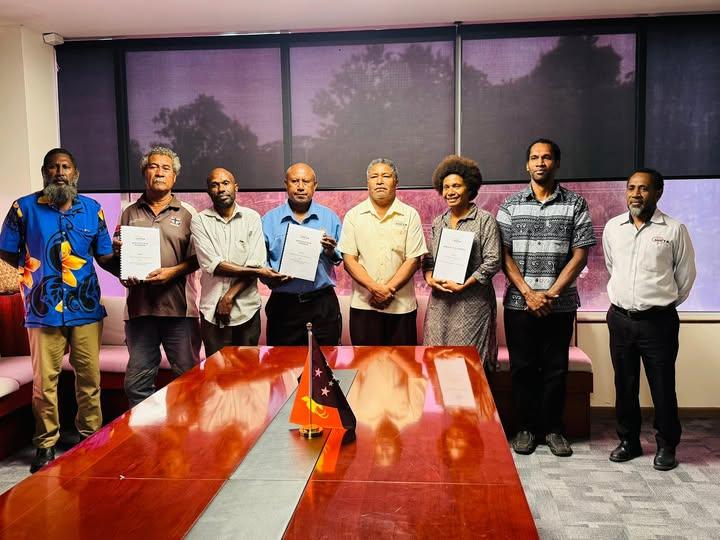
Thursday 27 February 2025, Port Moresby. Three institutions signed a Memorandum of Agreement (MoA) each with the National ICT Authority in Port Moresby on Thursday 27th February 2025 to receive support through NICTA’s Universal Access Services (UAS) Secretariat.
Boera Primary School, Papa Junior High School and Laloki Community Resource Centre are all recipients of NICTA UAS ICT projects.

Boera and Papa will benefit under the Connect the School Project while Laloki’s assistance falls under Connect the Community Project.
The objective of connect the school project is to provide access to ICT for educational purposes, to bridge the digital divide by ensuring internet connectivity for school students and to promote sustainable ICT integration into the schools’ educational programs.

The benefits for the three recipients include provision of fixed broadband services which covers supply of VSAT with WiFi, 20 desktop computers for each of the two schools and the provision of grid power to Laloki Community Project.

The MoA allows transfer of ownership of these resources to the recipients after project completion. It is expected that these projects will improve learning by providing easy and affordable access to internet and other school materials to over 400 students of Boera (grades 3-8), 600 students of Papa (grade 3-10) and 2000 student dropouts, unemployed youths and surrounding community of Laloki Ward 1, all in Central Province, Papua New Guinea.

Categories
UAS in the News

Universal Access Scheme (UAS) Office Opening

Opening Statement by Minister for Information and Communication Technology, Hon.Timothy Masiu, MP – on the occasion of Universal Access Scheme (UAS) Office Opening
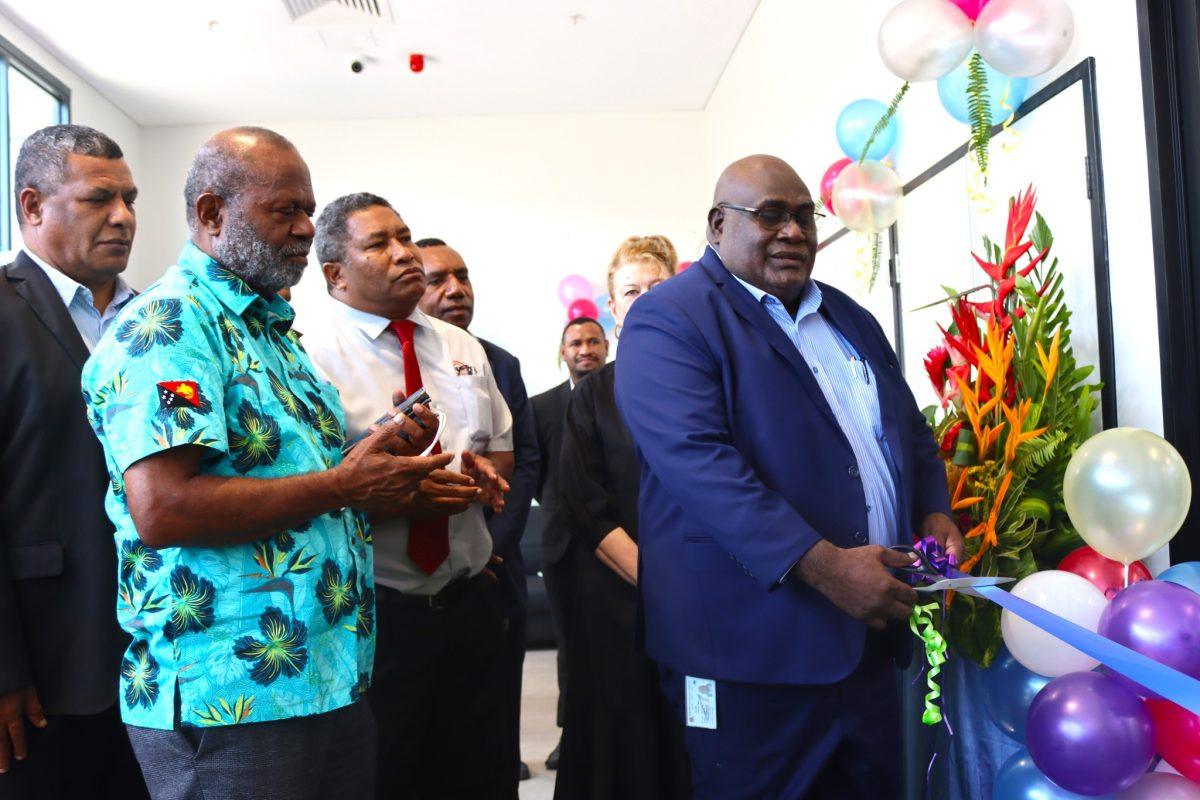
Friday, 01 March, 2024, Port Moresby. I am indeed pleased to officiate the opening of the Office of the Universal Access Scheme or UAS secretariat.

It is an important occasion, signifying the Marape-Rosso Government’s commitment to connect all Papua New Guineans. The UAS Secretariat was established to coordinate the implementation of the Government’s policy on Universal Access Scheme.

The key objective of the UAS policy is embedded in the National ICT Act, and its core function is clearly defined. This function is to facilitate the provision of ICT services to the underserved or unserved areas of PNG, particularly the rural and remote parts of PNG, by funding relevant ICT projects. ICT providers in PNG, like others in other developing nations, target the urban areas when providing coverage of ICT services for economic reasons. The rural and remote areas are not generally covered.

It is in this setting that the UAS Secretariat endeavors to facilitate expansion of ICT network coverage into areas that would otherwise be unviable or uneconomical for the service providers.
At this juncture, I wish to thank the three mobile operators, Digicel PNG limited, Telikom Limited and Vodafone for their mobile network coverage throughout PNG.

This is despite the many challenges that are faced by the operators in the provision of their services. The UAS team, currently has 8 members in the team. This number will increase by the end of this year by about 50 percent as the Secretariat looks to build its capacity to deliver on its mandate.

This growth in staff numbers has bought about the need for additional office space which is why this new office space is being opened. This team build-up is required to deliver on the approved UAS Projects that are tendered out annually. These projects are approved by the ICT Minister before being advertised for ICT operators to bid. As an example, the total value of approved projects for 2024 is K32.294M.
The procurement process has now commenced with awards expected during the year for implementation, some of these projects will rollover to next year.

Some of the Projects for this year includes new mobile towers to extend mobile internet to unserved and unserved areas mainly in rural PNG and will bring connectivity to about another 145,000 people.
Another project approved is the International Mobile Equipment Identity Register to track and find out where a mobile devise is currently located and to block the connecting to the networks and basically disabling the phone. Other projects include broadband connectivity to extend key government through digital connectivity, emergency communications and capacity building. It is equally important that the function of NICTA must be clearly distinguished from the function of UAS secretariat. NICTA regulates the ICT industry through the issuance of licenses and resources such as numbering and spectrum.

UAS secretariat must focus on identifying unserved and underserved areas in the country, mobilize funding and coordinate the implementation of UAS with all ICT operators to ensure connectivity reaches all parts of PNG. That is why it is important that UAS secretariat must have its own office and undertake its duties independently of the regulatory functions performed by NICTA.
In this regard, I will propose that UAS secretariat must have its own Corporate Plan to deliver on Government’s policy objectives on UAS.
This will compliment your new office to provide a conducive environment for UAS Board, Secretariat and staff to engage internally and externally to deliver on its core mandate of bringing connectivity to our citizens wherever they are.

On this note, I challenge UAS Secretariat Staff to make the best use of this facilities to progress your statutory responsibilities. There has to be accountability and transparency in what you are doing, and most important, we need to see the progressive reports on impacts of UAS program such as the unserved and underserved communities that are connected and benefiting.These reports must be widely published.
There are parts of the country that still needs connectivity, and by connectivity I am referring to 4G coverage where our people will have access to internet on their smart phones that will enable them to engage in e-commence, e-learning and range of other e-services that the Department of ICT is now spearheading.

We need a Master Plan that maps out the unconnected parts of PNG, the number of people in those areas that are unconnected and let us develop a short to medium- and long-term plan to bring connectivity to these areas. By 2027, all parts of the country where there are people living, should have connectivity.

With that, ladies and gentlemen, I want to congratulate NICTA CEO and your staff for the hard work in setting up the Office.

I also want to thank the UAS Board for your guidance towards making sure UAS secretariat have an Office of its own and the UAS secretariat for this milestone achievement.
Thank you and God Bless PNG.

Request Access

Fill out the form below, and we will be in touch shortly.

Contact Information
Location Details

Spotted a Blind Spot

If your area is missing or coverage is inaccurate, click the “Report Blind Spot” icon, mark your location, describe the issue, and submit to improve data accuracy.

Click On A Region

Click on a region to view its details, which will appear on the left side of the map. The pop out will contain details for that location.

Zoom In & Out

Zoom in or out to view regions in greater detail or to get a broader overview of the coverage. Use your scrolling wheel or Ctrl+up/down buttons.

Thank you

We will reach out soon

The Universal Access and Service (UAS) Strategic Plan 2023-2027 builds on the achievements of the 2018-2022 plan, which marked the first strategic framework for the UAS Fund in Papua New Guinea.