UAS

Categories
UAS in the News

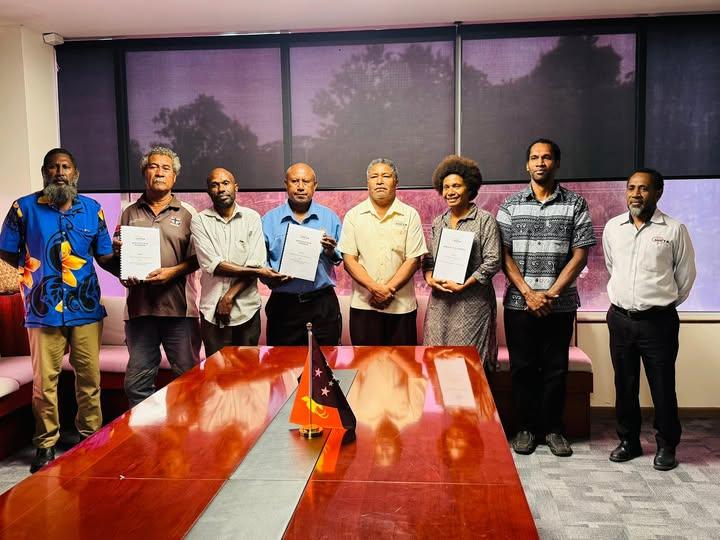
Three Institutions sign MoA with NICTA

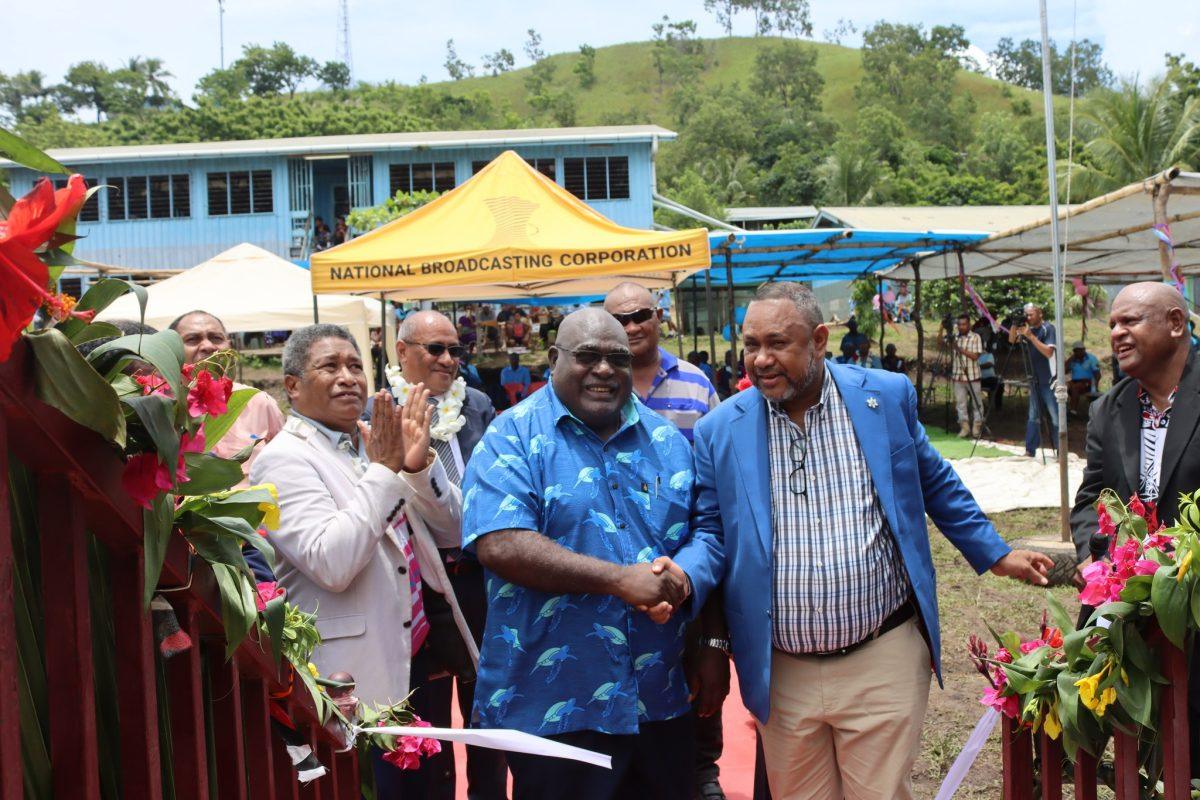
Thursday 27 February 2025, Port Moresby. Three institutions signed a Memorandum of Agreement (MoA) each with the National ICT Authority in Port Moresby on Thursday 27th February 2025 to receive support through NICTA’s Universal Access Services (UAS) Secretariat.
Boera Primary School, Papa Junior High School and Laloki Community Resource Centre are all recipients of NICTA UAS ICT projects.

Boera and Papa will benefit under the Connect the School Project while Laloki’s assistance falls under Connect the Community Project.
The objective of connect the school project is to provide access to ICT for educational purposes, to bridge the digital divide by ensuring internet connectivity for school students and to promote sustainable ICT integration into the schools’ educational programs.

The benefits for the three recipients include provision of fixed broadband services which covers supply of VSAT with WiFi, 20 desktop computers for each of the two schools and the provision of grid power to Laloki Community Project.

The MoA allows transfer of ownership of these resources to the recipients after project completion. It is expected that these projects will improve learning by providing easy and affordable access to internet and other school materials to over 400 students of Boera (grades 3-8), 600 students of Papa (grade 3-10) and 2000 student dropouts, unemployed youths and surrounding community of Laloki Ward 1, all in Central Province, Papua New Guinea.

Categories
UAS in the News

UAS SUMMARY

1. 1. Introduction
This is the Universal Access and Service Policy (UAS Policy) of the Government of Papua New Guinea. It addresses the Government’s objectives of achieving universal access to and utilization of Information and Communications Technologies (ICTs) and related
telecommunications services and applications by all citizens, households, businesses, public institutions, and civil service organizations throughout PNG. This revised UAS policy is the first step needed to accelerate internet access worldwide and help the GoPNG meet its Sustainable Development Goals, grow the economy, and help all people realise their potential.

This UAS Policy builds upon and updates the provisions of the National Information and Communications Technology Act 2009 (“the Act”) with respect to Universal Access and Service and provides a basis for any needed amendments to the Act in this area. It also
guides the implementation actions of the Government, the Department of ICT, and NICTA with respect to national UAS objectives. UAS policies do not just cover connectivity, but
also measures to ensure affordability and inclusion for all. UAS policies are the way governments have been effectively and collaboratively with the private sector, NGOs, the international community to achieve these goals and close access gaps. The UAS Policy is a key pillar to achieving the Government’s digital transformation goals. The goal of this revised Universal Service & Access Policy is to act as catalyst for action
to drive down the price of Internet access, expand coverage to the millions that remain unconnected, and build the inclusive foundation for a robust digital economy. This revised policy will
modernise the UAS Policy and the Universal Access and Service Fund (UASF) mandate to build an inclusive and strong digital economy within PNG. The GoPNG can meet these goals by adopting this revised universal access policy with a modern, ambitious UASF criteria: commit adequate resources— financial, political, and human —
to the USAF to deliver on its mandate; and ensure transparency, accountability, and partnering with the private sector, civil society organisations, and the technical community.

The main objective here is to set targets that are ambitious but also inspirational. We will accomplish these goals by catalysing and accelerating innovation across multiple sectors and actors in the economy and re-imagine a better future by organizing public and private investments to achieve that future.

2.0 Guiding Vision
The Vision of the Government of Papua New Guinea is to transform the nation to become a fully modern, prosperous, and integrated digital/information age economy and society. This will mean that all citizens will have the ability to access and utilize advanced, high-quality information and communication technology (ICT) services, devices, applications, and resources. These capabilities will be robustly available and affordable throughout the UAS Summary Document for Stakeholder Consultation

2.1 country, and will be adapted to the needs and goals of all groups in society, including
women, persons with disabilities, and those living in remote areas. All citizens and
businesses will enjoy opportunities to improve their digital literacy, along with the ability
to take advantage of digital financial services, education and training, social networking,
and e-entertainment, among many other benefits.

2.2 Key UAS Objectives
The key Objectives of UAS Policy in PNG, in keeping with the above Vision, include the
following:

  • Accessibility: ICT networks, services, facilities, equipment, and applications should be as widely accessible as possible to all citizens, businesses, and organizations, in all locations
    throughout the country.
  • Availability: A wide range of ICT services should be available to all users at all times.
  • Affordability: All elements required for ICT connectivity and use must be affordable to citizens and businesses of all incomes and economic conditions regardless of where they live.
  • Utilization: Citizens, businesses, and organizations must be able utilize ICT facilities and services effectively and appropriately, and such utilization should be measurable and ensured across all geographic and demographic groups.
  • Meaningful Connectivity: measures connectivity according to four dimensions and sets the following minimum thresholds, which are:
  1. Regular Internet use
  2. An appropriate device, i.e., access to a smartphone
  3. Enough data, which is translated as an unlimited broadband connection
  4. A fast and reliable connection with the minimum threshold: 4G mobile connectivity

3.0 UAS Focus Areas
DICT/NICTA have identified five key Focus Areas for UAS development objectives, policy,
financial support, programs, projects, and initiatives by the Government, toward the
shared goals of universal access and service in ICTs. The primary requirement for
Universal Access and Service is to ensure that advanced telecommunications services are
accessible and available in all geographic areas and for all communities. The five
identified focus areas are:
• Network and Service Coverage and Access
• Affordable Devices
• ICT Business Development, Applications, Content, Utilization
• Public Institutions, Government Services
• Gender and Social Inclusion
3.1 Network and Service Coverage and Access
The GoPNG understands that in many communities the lack of power is an issue and will
work to ensure that the lack of power does not preclude the building or operation of
networks in rural areas.
• Mobile broadband: Access to high quality, reliable mobile broadband signals
represent a basic necessity for participation in the information society. Given the
UAS Summary Document for Stakeholder Consultation
3
evolution of this technology, the Government considers that the minimum quality
of service that should be provided in all locations is the equivalent of “4G” mobile
service. This standard may change as the industry evolves.
• Fixed broadband: The Government will promote and support the continued
expansion of fixed broadband networks and services to locations without such
networks. This expansion will not be limited to traditional ISPs or networks but also
include community or local based cooperatives or networks.
• Schools and Health Centers: Access to high quality, reliable mobile broadband
signals represent a basic necessity for participation in the information society. As
such all efforts will be made to ensure that the schools and health facilities have
access to the Internet for learning and for remote health services.
• Public access facilities: There are a range of potential options for such public
connections, including libraries, post offices, local government offices, community
centers, bus stations, airports, and commercial Internet cafés, among others.
• Power Infrastructure: The Government through DICT and NICTA will continue to
take steps, including through UAS Fund Projects and other programs, to close gaps
in the coverage in rural and remote areas that lack adequate power by focusing on
alternative options such as Solar, mini grids, off-grids, and low-power networks and
solutions.
• Broadcasting: Traditional radio and television broadcasting remain a key component
of the overall national ICT infrastructure and communications delivery networks
3.2 Affordable Devices
The UAS Policy aims to ensure that appropriate and fully functional devices can be made
affordable to all who need them, via a combination of programs, partnerships,
incentives, and other mechanisms. In particular, the Government will seek to promote
the following objectives and targets:
Affordable smart phones, handsets: The Government through DICT and NICTA and
through the UAS Fund, will work to promote income-based discounts, bulk purchases,
and targeted subsidies to ensure that high quality devices are affordable to all,
particularly those living in remote and rural areas, and for persons with disabilities
Devices for small businesses: The Government through DICT and NICTA will explore
programs to extend affordable device options to qualified enterprises, through financing,
partnerships, and other support mechanisms.
3.3 ICT Business Development, Applications, Content, Utilization
The benefits of Universal Access to ICTs depend also upon development of ICT-based
businesses and entrepreneurship in PNG. The Government will take a lead in developing
and promoting e-business opportunities in PNG, including establishment of ICT Business
Incubation Centers, which will offer direct support to entrepreneurs, and will support
partnerships and investments in innovative technology business models. These initiatives
will address, among others, the following priority issues:
• Support for ICT Business Incubation and Support:
• Robust, public information content and applications:
• Digital finance and payments:
• ICTs for Farmers:
• ICT awareness, Digital skills and Digital Literacy
UAS Summary Document for Stakeholder Consultation
4
3.4 Public Institutions, Government Services
• Education: The Government will endeavor to supply all public educational
institutions with fully functional, advanced ICT resources. This includes support for
developing on-line and digital curriculum, and training for educators in development
and use of ICT-based resources.
• Health care: The Government will promote the availability and adoption of
advanced, specialized ICT-based equipment, services, and applications throughout
the public health system in PNG.
• Local government offices: As part of its Universal Access and Service strategies, the
Government through DICT and NICTA will support bringing connectivity, equipment,
applications, and skills development projects to local government administrations
wherever they are needed.
• Disaster and Emergency Services: The Government will devote priority resources
toward establishing and reinforcing emergency communications networks and
facilities, with emphasis on remote regions.
3.5 Gender and Social Inclusion
Women and persons with disabilities tend to be significantly less likely to own phone,
access the Internet and on-line services, and integrate ICT functions in their daily
lives. People with disabilities also generally face significant barriers to ICT access and
use. The Government will increase the focus on ensuring equitable access and
promoting inclusive technology awareness and use throughout all of the components
of this Policy.
• Data collection and monitoring: NICTA in cooperation with the Government
Statistician shall be responsible to collect data and report on gender, Persons with
Disabilities (PWD), and other significant disparities in subscribership and
utilization of ICTs on an annual basis.
• Consultations and engagement: GoPNG will initiate ongoing public consultations
with representatives of women’s organizations, of people with disabilities, and of
other identified disadvantaged groups, to provide information and perspective
regarding these groups’ needs, and input to various GoPNG programs and
decisions.
• UAS Fund Projects: All UAS Fund Projects must include provisions requiring
operators and contractors to provide plans for reducing access disparities among
target groups within the covered geographic areas, including clear methods for
measuring and defining such disparities, as part of their project implementation
agreements.
• Licensed operators: Any new licenses or amendments to existing licenses shall
include provision requiring licensees to develop and implement plans, including
data collection and measurement methods, to reduce access disparities among
target groups.
• Programs and initiatives: The Government will develop, and support programs
and initiatives specifically designed to increase awareness, skills, opportunity, and
capabilities with respect to ICT utilization by women, girls, PWDs and other
disadvantaged groups.
UAS Summary Document for Stakeholder Consultation
5
4.1 UAS Fund Structure and Management
In its current form under the Act, the UAS Fund consists of a separate Board, and a
Secretariat jointly run by DICT and NICTA, with financial and operational management
under the responsibility of NICTA, subject to approvals and oversight by both the UAS
Board and the Minister. Under the present structure, there continue to be inefficiencies,
delays, improper incentives, issues with performance metrics and/or other challenges
which inhibit the effective operation of the Fund and achievement of its goals. This new
policy changes the governance of the UAS Management, Board, and Secretariat from being
a section/bureau to becoming a semi-autonomous Division within NICTA, with separate
management, personnel, and operating budget.
4.2 Financing of the UAS Fund
• Mandatory UAS Levy contributions from Licensees: As indicated in Section 107 of
the Act, NICTA is empowered to levy charges on licensed operators for contributions
to the Fund, and operators are required to cooperate with NICTA by providing
relevant information and paying the designated amounts.
• Determination of Levy amount: Under the current Act, NICTA shall determine the
amount of the Levy on an annual basis as a percentage of operator net revenues.
According to the Act, NICTA and the UAS Board are not required to prepare a pro
forma budget or operating plan for a given Fund fiscal year in order to determine
the “desired level of funding.” Moreover the Act and this policy has stated that any
UAS Fund Levy that the UAS or NICTA has determined in the amount of 2% of net
revenues or below shall be considered presumptively reasonable for purposes of
financing any given year’s UAS Fund Projects. Only amounts higher than 2% require
a budget, demonstrating the need for such an amount, and approval by the UAS
Fund Board.
• Collection and enforcement of contributions: As stated in section 107, operators are
obligated to make the designated Levy contribution payments, and these may be
recovered via the courts, and/or from other moneys owed. In addition, NICTA shall
be authorized to impose appropriate penalties and sanctions upon operators for
non-payment or late payment of required UAS Fund Levies, including, inter alia:
fines and surcharges; withholding of authorizations, license renewals, or approvals
for other NICTA requirements; disqualification from competing for UAS Projects;
surrender or modification of existing UAS Project contracts and payments; and such
other sanctions as NICTA may prescribe in the Regulations. NICTA may also
publicize the fact that operators have failed to pay their obligations.
• Pay or Play option: NICTA may introduce and exercise a “Pay or Play” option for
licensed operators to undertake approved UAS Projects in lieu of, and for the same
value as, their required financial contribution to the UAS Fun

Categories
UAS in the News

UAS Projects for 2025

The National Information and Communications Technology Authority (NICTA) invites all interested stakeholders and members of the public to participate in the public consultation process for the Universal Access and Service (UAS) Projects for 2025.

NICTA has released a Consultation Paper outlining the proposed UAS Projects, and is seeking feedback, comments, and suggestions from interested parties. The Consultation Paper can be accessed online via NICTA’s official website at www.nicta.gov.pg. Hard copies are also available at NICTA’s Head Office in Hohola and at the UAS Office located on Level 3, Rangeview Plaza.

All written submissions and comments must be sent by email to: consultation.submission@nicta.gov.pg no later than close of business on Friday, 22nd November 2024.

Categories
UAS in the News

Public Consultation – UAS Strategic Plan 2023-2027 and Proposed UAS Projects for 2023

NICTA hereby informs all interested parties and stakeholders of the release of the Consultation Paper on Universal Access and Service (UAS) Strategic Plan 2023-2027 and the Proposed UAS Projects for 2023.

NICTA is seeking comments and views of interested parties and members of the public on the UAS Strategic Plan and the UAS Projects for 2023. The consultation document is available on NICTA website (www.nicta.gov.pg). Hard copies of the Consultation Paper are also available from NICTA head office.

All written submissions and comments on the consultation document should be emailed to: consultation.submission@nicta.gov.pg and received by close of business Wednesday, 26 October 2022.

Copies of submissions received will be published on NICTA’s public register consistent with the requirements under subsection 229(3) of the Act. Any respondent wishing to claim confidentiality over information submitted should follow the procedures set out in the current guidelines on the submission of written comments to public consultations and public inquiries, which are also available from NICTA’s Public Register at www.nicta.gov.pg.

Enquiries in relation to this matter can be directed to Mr. Veari Iru, Acting Director – UAS Secretariat at NICTA on email: viru@nicta.gov.pg or contacted on 3033227 during office hours.

Panny Yokope

Acting Chief Executive Officer

Consultative Papers

Categories
UAS in the News

Papua New Guinea celebrates the International Day for Universal Access to Information

Universal access to information means that everyone has the right to seek, receive and disseminate information. Right to Information is an integral part of the right to freedom of expression. Access to information is recognized as a prerequisite for sustainable development and, as part of right to information, one of the fundamental human rights.

The 74th United Nations General Assembly proclaimed 28 September as the International Day for Universal Access to Information in October 2019 (previously known as Right to Know Day).

UNDP, within the Preventing and Countering Corruption in Papua New Guinea Project (PNG Anti-Corruption Project) in partnership with Department for Information and Communications Technology organized a Roundtable on Establishing and Implementing the Effective Right to Information System on International Day for Universal Access to Information Day, on 28 September 2022 in the Grand Papua Hotel in Port Moresby.

The roundtable was organized within the PNG Anti-Corruption Project, funded by the European Union and implemented jointly by UNDP and UNODC.

Papua New Guinea is currently finalizing the Right to Information Policy in partnership with Department of Information and Technology Communications UNDP which will lead to development of the Freedom of information legislation.

Minister for Information and Communication Technology, Hon. Timothy Masju, said:

“Right to Information is a requirement under Section 51 of PNG’s Constitution. This Constitutional framework needs to be made enforceable under appropriate legislation. Unfortunately, we do not have a legislation on Freedom of Information since Independence to date.  There were previous efforts to develop a legislation on ‘access to information’ but that were never realized.  I am pleased to announce now that the Ministry of ICT is giving priority to ensure a Policy and a legislation, giving effect to Section 51 of our Constitution, is realized for our people.”

Minister Masiu said that for PNG to become a knowledgeable society, as captured in the PNG Vision 2050, it must first begin with enabling its citizens easy access to daily government information that they require for planning and decision-making. “The mechanisms that we put in place to enable public to access government information must allow for clear distinction of what is public information that can be accessed and the exemptions such as confidential or secret information.”

Minister Masiu thanked the UNDP, European Union and key partners who are supporting the Government to ensure access to information will be enforceable under relevant legislation.

“The Roundtable examined current efforts in Papua New Guinea to establish and implement a robust Right to Information Policy architecture. It presented an opportunity to raise awareness on the importance of freely available public information for all citizens. Such initiatives greatly contribute to preventing corruption through disclosure which increases transparency and raises standards of accountability,” said Mr. Edward Vrkic, UNDP Officer in Charge. Officer in Charge.

“Under the EU-PNG Partnership for Good Governance, the European Union allocated approximately 100 million Kina for actions aiming at promoting good governance and the respect of the rule of law. I wish to renew the firm commitment of the European Union to stand by the PNG government and civil society to further progress core reforms, including the establishment and implementation of an effective Right to Information System,” said Dr Razvan Silviu Jora, EU Deputy Head of Delegation.

Representatives from the DICT, PMNEC, Interim Independent Commission Against Corruption (ICAC), Ombudsman Commission, National Procurement Commission, the Immigration and Citizenship Authority, OGP Secretariat, Media Council, TI Papua New Guinea and representatives of the Right to Information (RTI) Unit from Vanuatu attended the Roundtable.

The 2022 theme for the International Day for Universal Access to Information is ‘Artificial intelligence, e-governance and access to information’. Right to information for every citizen is recognized in the PNG National Constitution.

The PNG Anti-Corruption Project aims to strengthen the Government’s commitment and capacities to address corruption in line with the United Nations Convention against Corruption (UNCAC).

Read original article

Categories
UAS in the News

Final Universal Access Service (UAS) Policy for Consultation

This is the Universal Access and Service Policy (UAS Policy) of the Government of Papua New Guinea. It addresses the Government’s objectives of achieving universal access to and utilization of Information and Communications Technologies (ICTs) and related
telecommunications services and applications by all citizens, households, businesses, public institutions, and civil service organizations throughout PNG.

The goal of this revised Universal Service & Access Policy is to act as catalyst for action to drive down the price of Internet access, expand coverage to the millions that remain unconnected, and build the inclusive foundation for a robust digital economy. This revised policy will modernise the UAS Policy and the Universal Access and Service Fund (UASF) mandate to build an inclusive and strong digital economy within PNG.

Categories
UAS in the News

NICTA’s New Branch Focuses on Bringing Connectivity to Underserved Areas

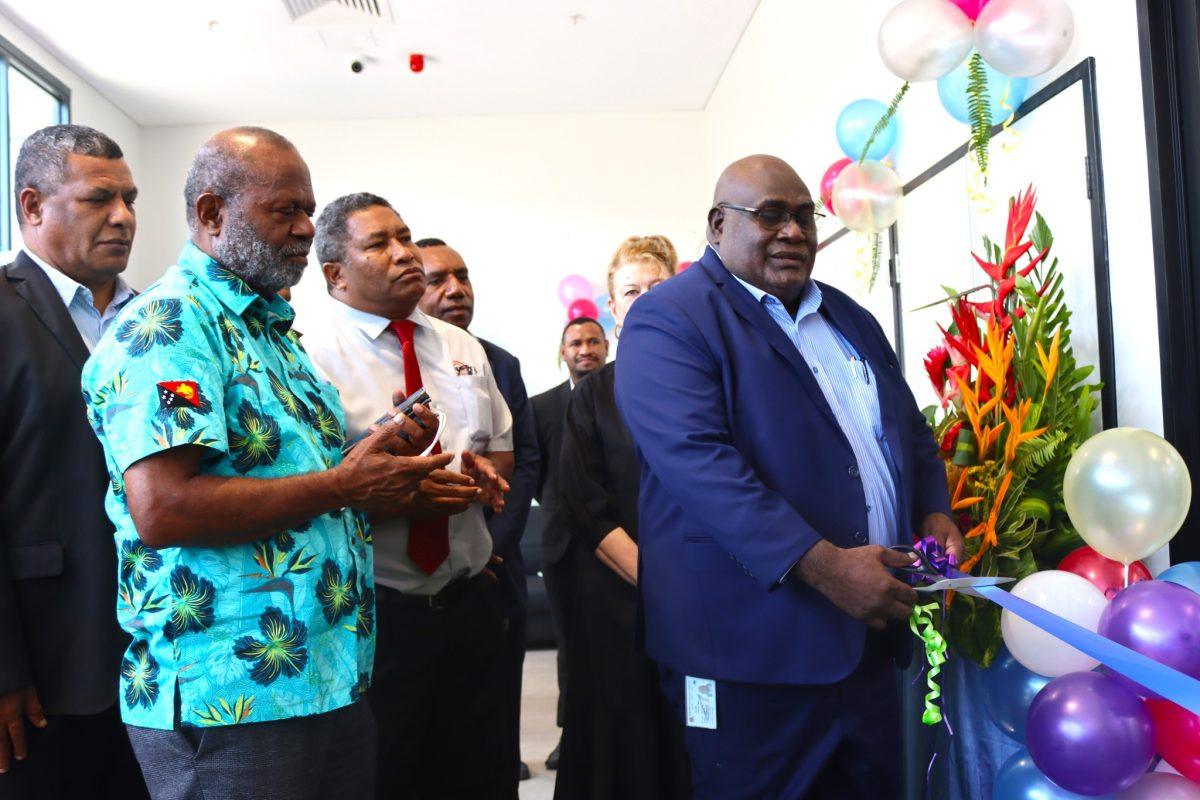
The National Information and Communication Technology Authority (NICTA) officially opened its new Universal Access Service (UAS) Branch at Range View Plaza on March 1, 2024. The ceremony was officiated by Minister for Information and Communication Technology, Hon Timothy Masiu.

The Universal Access Service Secretariate was established through the Department of ICT’s Universal Access Policy and marks a significant step in the government’s efforts to expand internet access across the country. Minister Masiu emphasized the distinction between NICTA’s regulatory role and the UAS’s operational focus.

“NICTA regulates the ICT industry through licensing and resource allocation,” Minister Masiu explained. “The UAS Secretariat, operating from this new location, will now intensify its efforts to identify unserved and underserved remote areas.”

The ICT Minister urged the UAS to collaborate with all ICT operators to ensure connectivity reaches all corners of Papua New Guinea.

He highlighted the importance of this initiative, stating, “Connecting rural areas with 4G internet coverage will allow people to engage in e-commerce, e-learning, and a range of other e-services.”

NICTA Chairman, Mr. Noel Mobiha, elaborated on the function of the new branch. “This facility is a platform for open communication with all telecommunication companies, our clients, and licensees,” he said. “We aim to work collectively to deliver services to unconnected areas.”

ICT Minister Hon Timothy Masiu commended the NICTA Board and staff for their hard work in establishing the independent UAS branch. “This separation of functions ensures the UAS can focus solely on delivering crucial connectivity services,” he concluded.

Read UAS Policy: https://www.ict.gov.pg/universal-access-services-uas-policy/

Categories
UAS in the News

NICTA’s New Branch Focuses on Bringing Connectivity to Underserved Areas

The National Information and Communication Technology Authority (NICTA) officially opened its new Universal Access Service (UAS) Branch at Range View Plaza on March 1, 2024. The ceremony was officiated by Minister for Information and Communication Technology, Hon Timothy Masiu.

The Universal Access Service Secretariate was established through the Department of ICT’s Universal Access Policy and marks a significant step in the government’s efforts to expand internet access across the country. Minister Masiu emphasized the distinction between NICTA’s regulatory role and the UAS’s operational focus.

“NICTA regulates the ICT industry through licensing and resource allocation,” Minister Masiu explained. “The UAS Secretariat, operating from this new location, will now intensify its efforts to identify unserved and underserved remote areas.”

The ICT Minister urged the UAS to collaborate with all ICT operators to ensure connectivity reaches all corners of Papua New Guinea.

He highlighted the importance of this initiative, stating, “Connecting rural areas with 4G internet coverage will allow people to engage in e-commerce, e-learning, and a range of other e-services.”

NICTA Chairman, Mr. Noel Mobiha, elaborated on the function of the new branch. “This facility is a platform for open communication with all telecommunication companies, our clients, and licensees,” he said. “We aim to work collectively to deliver services to unconnected areas.”

ICT Minister Hon Timothy Masiu commended the NICTA Board and staff for their hard work in establishing the independent UAS branch. “This separation of functions ensures the UAS can focus solely on delivering crucial connectivity services,” he concluded.

Read UAS Policy: https://www.ict.gov.pg/universal-access-services-uas-policy/

Categories
UAS in the News

Universal Access Scheme (UAS) Office Opening

Opening Statement by Minister for Information and Communication Technology, Hon.Timothy Masiu, MP – on the occasion of Universal Access Scheme (UAS) Office Opening
Friday, 01 March, 2024, Port Moresby. I am indeed pleased to officiate the opening of the Office of the Universal Access Scheme or UAS secretariat.

It is an important occasion, signifying the Marape-Rosso Government’s commitment to connect all Papua New Guineans. The UAS Secretariat was established to coordinate the implementation of the Government’s policy on Universal Access Scheme.

The key objective of the UAS policy is embedded in the National ICT Act, and its core function is clearly defined. This function is to facilitate the provision of ICT services to the underserved or unserved areas of PNG, particularly the rural and remote parts of PNG, by funding relevant ICT projects. ICT providers in PNG, like others in other developing nations, target the urban areas when providing coverage of ICT services for economic reasons. The rural and remote areas are not generally covered.

It is in this setting that the UAS Secretariat endeavors to facilitate expansion of ICT network coverage into areas that would otherwise be unviable or uneconomical for the service providers.
At this juncture, I wish to thank the three mobile operators, Digicel PNG limited, Telikom Limited and Vodafone for their mobile network coverage throughout PNG.

This is despite the many challenges that are faced by the operators in the provision of their services. The UAS team, currently has 8 members in the team. This number will increase by the end of this year by about 50 percent as the Secretariat looks to build its capacity to deliver on its mandate.

This growth in staff numbers has bought about the need for additional office space which is why this new office space is being opened. This team build-up is required to deliver on the approved UAS Projects that are tendered out annually. These projects are approved by the ICT Minister before being advertised for ICT operators to bid. As an example, the total value of approved projects for 2024 is K32.294M.
The procurement process has now commenced with awards expected during the year for implementation, some of these projects will rollover to next year.

Some of the Projects for this year includes new mobile towers to extend mobile internet to unserved and unserved areas mainly in rural PNG and will bring connectivity to about another 145,000 people.
Another project approved is the International Mobile Equipment Identity Register to track and find out where a mobile devise is currently located and to block the connecting to the networks and basically disabling the phone. Other projects include broadband connectivity to extend key government through digital connectivity, emergency communications and capacity building. It is equally important that the function of NICTA must be clearly distinguished from the function of UAS secretariat. NICTA regulates the ICT industry through the issuance of licenses and resources such as numbering and spectrum.

UAS secretariat must focus on identifying unserved and underserved areas in the country, mobilize funding and coordinate the implementation of UAS with all ICT operators to ensure connectivity reaches all parts of PNG. That is why it is important that UAS secretariat must have its own office and undertake its duties independently of the regulatory functions performed by NICTA.
In this regard, I will propose that UAS secretariat must have its own Corporate Plan to deliver on Government’s policy objectives on UAS.
This will compliment your new office to provide a conducive environment for UAS Board, Secretariat and staff to engage internally and externally to deliver on its core mandate of bringing connectivity to our citizens wherever they are.

On this note, I challenge UAS Secretariat Staff to make the best use of this facilities to progress your statutory responsibilities. There has to be accountability and transparency in what you are doing, and most important, we need to see the progressive reports on impacts of UAS program such as the unserved and underserved communities that are connected and benefiting.These reports must be widely published.
There are parts of the country that still needs connectivity, and by connectivity I am referring to 4G coverage where our people will have access to internet on their smart phones that will enable them to engage in e-commence, e-learning and range of other e-services that the Department of ICT is now spearheading.

We need a Master Plan that maps out the unconnected parts of PNG, the number of people in those areas that are unconnected and let us develop a short to medium- and long-term plan to bring connectivity to these areas. By 2027, all parts of the country where there are people living, should have connectivity.

With that, ladies and gentlemen, I want to congratulate NICTA CEO and your staff for the hard work in setting up the Office.

I also want to thank the UAS Board for your guidance towards making sure UAS secretariat have an Office of its own and the UAS secretariat for this milestone achievement.
Thank you and God Bless PNG.

Request Access

Fill out the form below, and we will be in touch shortly.

Contact Information
Location Details

Spotted a Blind Spot

If your area is missing or coverage is inaccurate, click the “Report Blind Spot” icon, mark your location, describe the issue, and submit to improve data accuracy.

Click On A Region

Click on a region to view its details, which will appear on the left side of the map. The pop out will contain details for that location.

Zoom In & Out

Zoom in or out to view regions in greater detail or to get a broader overview of the coverage. Use your scrolling wheel or Ctrl+up/down buttons.

Thank you

We will reach out soon

The Universal Access and Service (UAS) Strategic Plan 2023-2027 builds on the achievements of the 2018-2022 plan, which marked the first strategic framework for the UAS Fund in Papua New Guinea.